When the final infusion is complete and the "end of treatment" bell is rung, a complex mix of emotions often washes over cancer survivors. There is relief, certainly, but it is frequently shadowed by a profound sense of uncertainty. You have done everything your oncology team asked of you. But as you step back into regular life, the lingering question remains: What now? What can I actively do to stop the cancer from coming back?
For decades, the advice has been well-meaning but distressingly vague: "Try to eat well" or "Stay active." While intuitive, this advice lacked the hard data needed to make it feel essential. That changed with a landmark study published in the New England Journal of Medicine, which has profoundly shifted the landscape of survivorship. The message is no longer just about "wellness." The message now is about survival. Here is why the new science on exercise is the most empowering prescription you may ever receive.,For years, researchers hinted that exercise seemed correlated with better cancer outcomes. But correlation isn't proof. We needed a randomized, Phase 3 clinical trial—the gold standard of medical research—to prove cause and effect.
Enter the CHALLENGE Trial, the results of which were released in mid-2025. The study followed nearly 900 patients in Canada, Australia, and the UK who had completed surgery and chemotherapy for high-risk Stage II or Stage III colon cancer. One group received standard health education materials.The other group was enrolled in a structured, three-year aerobic exercise program, supervised by professionals, aiming for about 2.5 hours of moderate activity per week.After tracking these patients for a median of eight years, the results were staggeringhe researchers involved.The patients in the structured exercise group saw a 28% lower risk of their cancer returning (disease-free survival) compared to the control group. Even more powerfully, the exercise group showed a 37% lower risk of death from any cause (overall survival) during the follow-up period. To put that in perspective: the magnitude of that survival benefit is comparable to, and sometimes exceeds, the benefit gained from many standard chemotherapy regimens used today.
This study is a paradigm shift because it moves physical activity out of the "lifestyle option" column and firmly into the "adjuvant therapy" column. Perhaps the most encouraging finding from the CHALLENGE trial was that the survival benefits were independent of weight loss. You didn’t have to shrink your waistline to shrink your risk. This suggests that it is the biological action of movement itself, not just burning calories, that is doing the heavy lifting. Exercise appears to create an internal environment hostile to cancer by lowering inflammation, improving insulin sensitivity, and potentially "waking up" the immune system to better conduct surveillance against microscopic residual disease.
What this means for your active role in recovery:
Knowing this data is profoundly empowering. It means that alongside your medical team, you are a vital participant in your own long-term care. But how do you translate a clinical trial into real life, especially when you are fatigued from treatment?
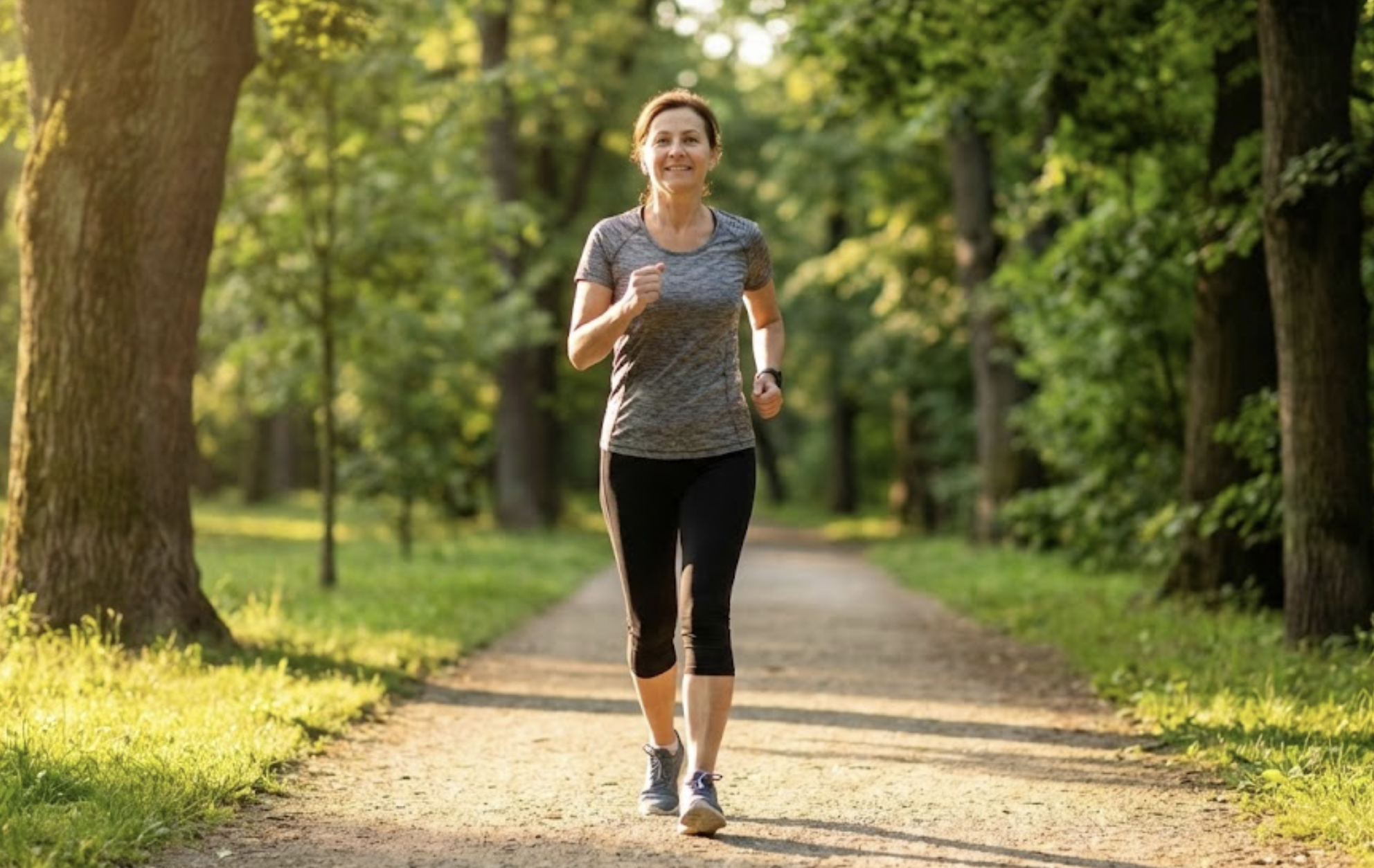
The goal of the study was roughly 150 minutes of moderate activity a week, think brisk walking, cycling, or swimming where you can talk, but not sing. Here is how to approach that goal safely and effectively:
1. The "Start Low, Go Slow" Mantra If you are currently inactive due to treatment fatigue, do not aim for 150 minutes next week. Start with 10-minute blocks of walking. Consistency is far more important than intensity right now. Build up slowly over months.
2. Seek Professional Guidance The CHALLENGE trial used supervised exercise. While not everyone has access to a clinical trial trainer, ask your oncology team for a referral to a cancer exercise specialist or physical therapist. They can help you design a program that respects your current physical limitations and monitors for issues like neuropathy or balance concerns.
3. Redefine "Exercise" It doesn't have to happen in a gym. Gardening, dancing in your living room, or walking the dog briskly all count. The best exercise is the one you enjoy enough to repeat.
4. Listen to Your Body, But Don't Be Ruled By It There will be days when fatigue is heavy. On those days, a gentle stretch might be all you can manage, and that is okay. But on the days you have a little energy, spend it on movement. The data shows that over time, exercise actually combats cancer-related fatigue rather than worsening it.
The path of survivorship is long, but you no longer have to walk it hoping you are doing the right thing. We now have definitive proof that lacing up your sneakers is a potent act of medicine. It is time to reclaim your body and take an active role in your long-term health.
Source:
Kerry S. Courneya, et.al. Structured Exercise after Adjuvant Chemotherapy for Colon Cancer, June 1, 2025, N Engl J Med 2025;393:13-25
DOI: 10.1056/NEJMoa2502760
https://www.nejm.org/do/10.1056/NEJMdo008039/full/